


Beit Shulamit: Building Hope for Northern Israel
- Shimon Eynan
- October 13, 2026
When I think about Beit Shulamit, I think about the people who will walk through its doors: a patient arriving for treatment, a family accompanying someone they love, a medical team starting another demanding day. They are the reason this project matters.
At Domark we manage complex projects, and over the years we have managed many of them. Beit Shulamit carries a special meaning for me - the chance to help create a place that makes a real difference for people at some of the hardest moments of their lives.
A New Home for Cancer Care
Beit Shulamit, at Emek Medical Center in Afula, was planned for Clalit as a comprehensive center for cancer treatment and research: radiotherapy, oncology and hematology inpatient wards, day treatment and support for patients and their families - alongside a cancer research institute run jointly with the Technion.
The center commemorates Dr. Shulamit Katzman, a pediatrician and the founder of Larger Than Life, and was made possible with the support of The Katzman Family Foundation. To me, a building dedicated to caring for people is a fitting way to honor a life devoted to others.
Treatment Closer to Home
For a cancer patient, the road to treatment becomes part of daily life - repeated visits, time away from work, someone to drive and someone to stay with the children. Bringing advanced cancer care to Afula eases that burden for families across the north, and lets patients stay closer to their routine and their community during treatment. I see it as an investment not only in medicine, but in the future of the north.
Working with the Design Team
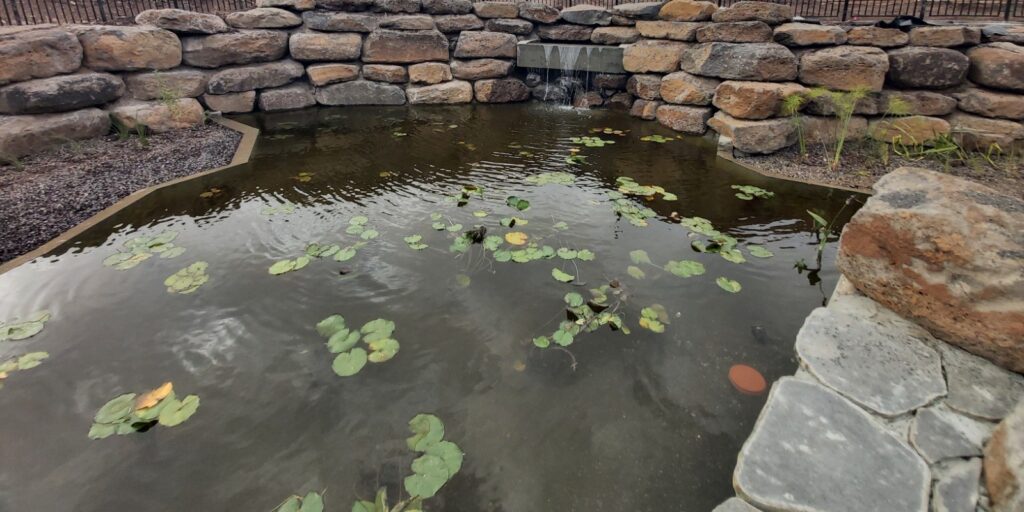
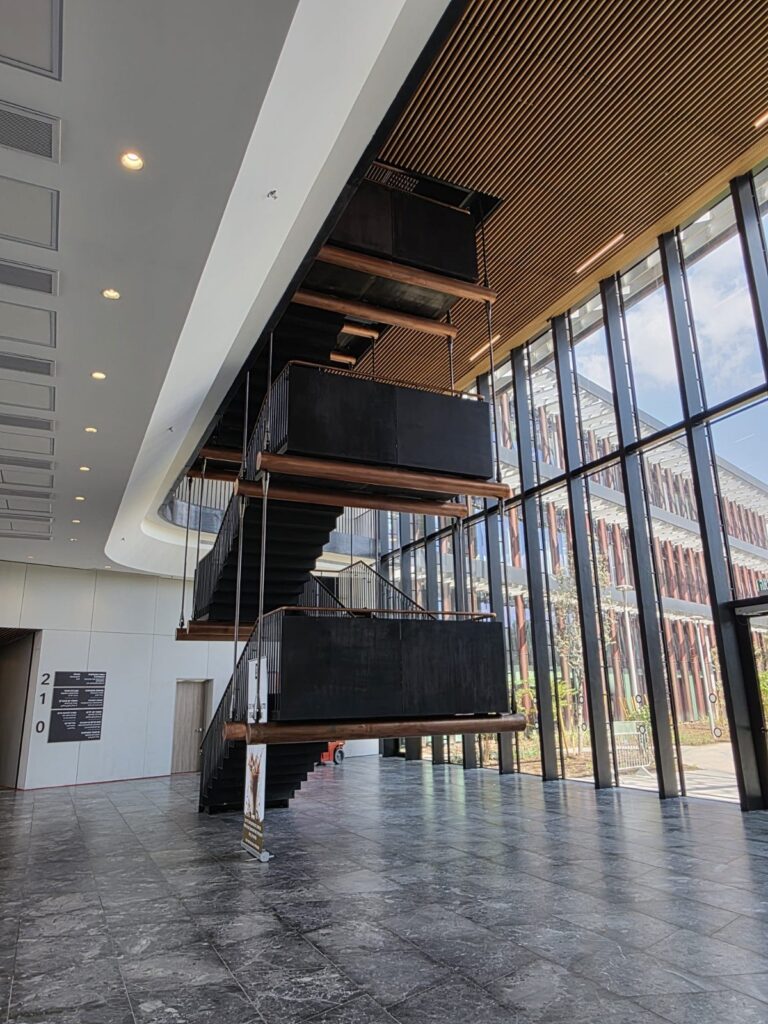
The building was designed by the architect Ron Arad, whose office is in London, with Moshly-Eldar Architects as the project's operational architects. Working with a design team spread between London and Israel required precise and continuous coordination - across time zones, drawings and decisions. Ron Arad's vision is bold: curved facades, a suspended staircase in a glazed lobby, landscaped courtyards and healing gardens. Moshly-Eldar's team made sure that this vision also met the hospital's operational needs. Our role was to carry it from the drawings to a working hospital building, without losing the light, the views and the quiet corners that make it a place for people.
Building Through COVID and War

Beit Shulamit was not built in ordinary times. The COVID-19 pandemic disrupted supply chains worldwide, and lead times for equipment and materials grew longer and less predictable. We had to plan procurement earlier, look for alternatives and keep the schedule moving despite the uncertainty.
Then came the Iron Swords war. The building's parking floors were designed to convert into a protected emergency hospital - and in the middle of construction, that is exactly what happened: Emek Medical Center put them to use as an emergency hospital. For me, there was no clearer proof of how much this building was needed - even before it was finished.
Turning Vision into a Working Building
A project like this depends on close cooperation between the client, the medical teams, the architects, engineers, consultants, contractors and suppliers. As project managers, our job is to connect them all and keep decisions moving with a clear understanding of their consequences - design, infrastructure, medical equipment, budget and construction sequence all have to work together. In a hospital, this discipline has a direct human purpose: a well-resolved space supports the staff, and reliable infrastructure lets the facility work with confidence.
A Project I Am Proud Of
It is always satisfying to see a complex project take shape. With Beit Shulamit, the satisfaction runs deeper. I think about a family spared one more long journey, and about medical teams working in a building designed around their needs. Our part belongs to a much larger effort - of the medical teams, Clalit, the donors, the designers and the builders. Being part of it is a source of real pride, and a reminder of why I chose this profession.
Copyright © (2026) by Shimon Eynan. All rights reserved. No part of this publication may be reproduced, distributed, or transmitted in any form or by any means, including photocopying, recording, or other electronic or mechanical methods, without the prior written permission of the author, except in the case of brief quotations embodied in critical reviews and certain other noncommercial uses permitted by copyright law.